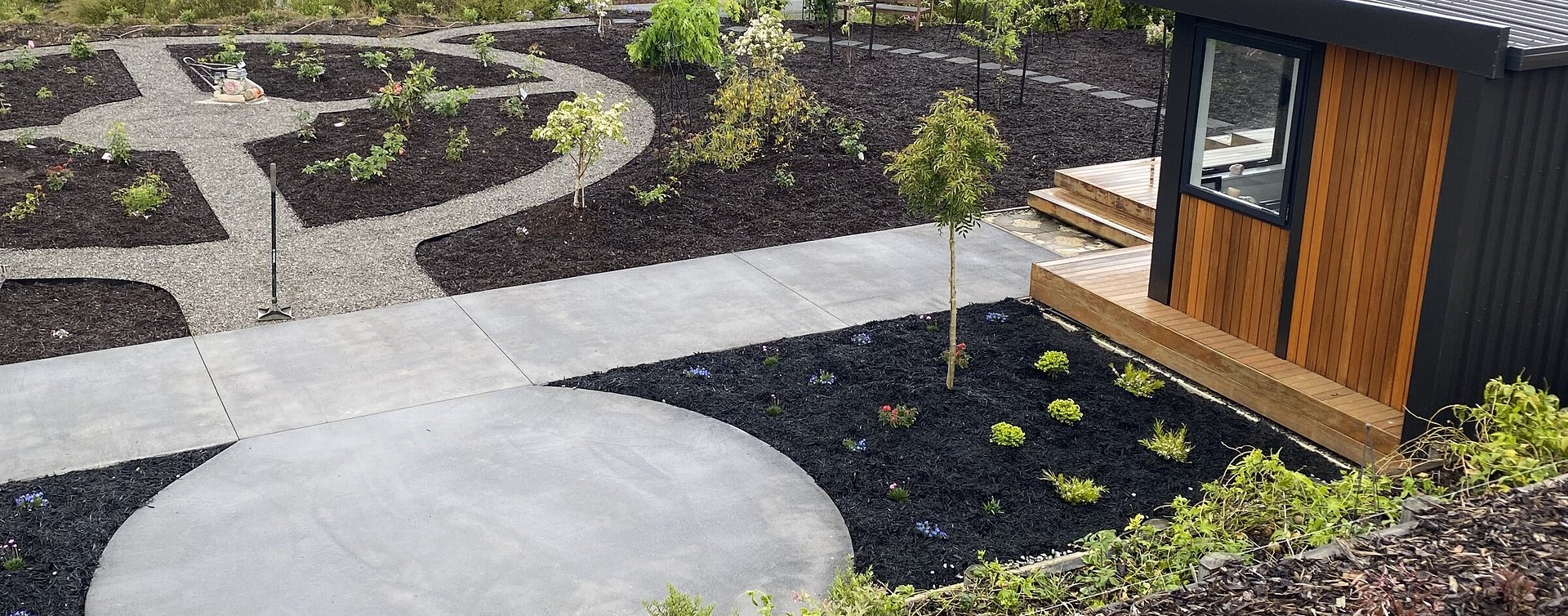
There’s something about a good deck that changes the way you use your home.
It might become the spot where you have your first coffee in the morning, where friends gather around the table on a summer evening, or simply somewhere to sit in the sun at the end of the day.
In Nelson and Tasman, where outdoor living is such a big part of how we enjoy our homes, a well-designed deck can create that easy connection between inside and out. Open the doors and suddenly the living area feels bigger, the garden feels closer and there’s another whole space to use.
But a great deck is about more than laying down some timber.
The best ones feel like they were always meant to be there.
A Good Deck Starts With How You Want to Use It
Before we think about timber, we think about the space.
Where does the sun fall during the day? Which doors should the deck connect with? Is there a view worth making the most of, or a prevailing wind we need to consider? Do you want enough room for a dining table, a barbecue, a couple of loungers, or all three?
On Nelson's sloping sections, a deck can do much more than provide somewhere to put the outdoor furniture. It can turn difficult or underused ground into genuinely useful living space and create a much better connection between the house and garden.
Steps, edges, access around the house and the relationship with existing landscaping all influence how natural the finished deck feels.
That's why we see deck building as part design and part construction.
A deck shouldn't just fit the dimensions available. It should fit the way you live.
Choosing the Right Decking Timber
Once the design is right, material choice makes a huge difference to the appearance, feel, maintenance and longevity of the finished deck.
There are plenty of decking options available in New Zealand, and no single material is right for every project.
Budget matters. Maintenance matters. So does the look you're trying to achieve.
But we certainly have our favourites.
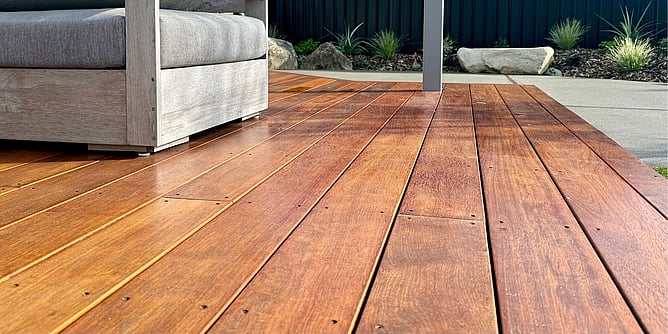
Kwila: Why It's One of Our Favourite Decking Timbers
We love working with Kwila.
It's a hardwood, it's durable and stable, it has a beautiful natural colour and it's friendly to work with. But there's another reason we like it that's harder to put on a specification sheet.
A well-built Kwila deck feels like furniture.
There's a warmth to it. It feels substantial underfoot, the timber has a beautiful finish and it gives us the stability to create the finer details that can lift a deck from simply functional to beautifully finished.
We particularly like using 140mm Kwila boards across the main deck surface.
Wider boards mean fewer lines running across the deck, so visually the surface feels calmer and less busy than a deck built entirely from narrower boards.
We can then use 90mm boards for details such as picture framing around the perimeter. It's a relatively small design decision, but it creates a deliberate border and gives the deck a more resolved, crafted appearance.
Kwila's stability is another advantage when we're working with mitred corners and detailed finishing. Good timber helps those joins remain tight and allows us to achieve the crisp finish we're looking for.
Like any natural timber, Kwila will change as it is exposed to the weather and needs appropriate care if you want to maintain its original colour. Responsible sourcing is also important when choosing imported hardwood.
It isn't the cheapest decking option, but when the project calls for a warm, long-lasting timber deck with a refined finish, it's very difficult to beat.
Treated Pine: A Good Deck on a Tighter Budget
Treated pine remains a practical option for homeowners who want the look and feel of a real timber deck while keeping an eye on budget.
It's widely available in New Zealand and its lower initial cost can make a significant difference on a larger deck.
The trade-off is that pine is a softer timber.
It doesn't have the same density, stability or expected longevity as a hardwood such as Kwila, and it can be more susceptible to wear and movement over time.
That doesn't make pine a bad decking material. For the right project and budget, it can make very good sense.
The important thing is understanding what you're getting and choosing the material based on your priorities rather than price alone.
What About Composite Decking?
Composite decking has become an increasingly popular alternative to timber, particularly for homeowners looking for a lower-maintenance outdoor space.
Made from a combination of wood fibres and recycled or synthetic materials, composite boards are designed to resist many of the issues associated with natural timber. They don't splinter, don't require regular oiling or staining, and offer good resistance to moisture, rot and insect damage.
Another advantage is consistency. Composite decking is manufactured to provide a more uniform colour and finish, with a wide range of tones and profiles available. This can work particularly well with contemporary homes where a clean, consistent appearance is part of the design.
For busy households, the reduced maintenance can be a real benefit. Cleaning is still required, but there's no need for the regular refinishing that may be needed to maintain the appearance of a natural timber deck.
There are trade-offs. Composite doesn't have quite the same natural variation, warmth or feel underfoot as real timber, and the initial material cost can be higher than some timber options. Different composite products can also vary considerably in quality, so choosing the right product is important.
For Sherlock, we personally enjoy working with timber and love the character it brings to a finished deck. But composite can be an excellent choice where low maintenance, consistency and long-term practicality are high on the homeowner's priority list.
Other Decking Timbers You'll Come Across
Vitex is another hardwood option available for decking in New Zealand. It offers good durability and stability and is an option homeowners may encounter when comparing hardwood decking products.
Macrocarpa is another familiar New Zealand timber, but it isn't something we generally choose for our decks.
We've found it can move and split more than we'd like, particularly when we're trying to achieve the tight, detailed finish we want from a deck.
That's an important part of choosing decking that can sometimes get lost when comparing materials purely by appearance or price.
What Makes a Deck Last?
The decking boards are the part you see, but they're only one part of a well-built deck.
What happens underneath matters just as much.
The structure needs to be designed and built correctly for the site. Timber treatment, fixings, drainage, ventilation and the way the deck connects with the house all play a role in how it performs over time.
Water needs somewhere to go. Timber needs the ability to dry. Fixings need to suit the materials and conditions they're being used in.
This becomes particularly important around Nelson and Tasman, where a site may have slope, clay soils, coastal exposure or drainage considerations to work around.
Good deck construction isn't just about making something look great on the day it's finished.
It's about making sure it still works beautifully years later.
Timber Decks Do Need a Little Love
One of the things we think homeowners should know before choosing a natural timber deck is that timber isn't maintenance-free.
It lives outside.
Sun, rain and everyday use will gradually change its appearance. Depending on the timber and the look you want, periodic cleaning and oiling or staining can help protect the surface and maintain its colour.
Some homeowners love keeping that rich timber colour. Others are perfectly happy allowing their deck to weather naturally over time.
Neither approach is necessarily wrong.
It's simply worth thinking about how much maintenance you're comfortable with when you're choosing between timber and composite decking.
So, What's the Best Decking for a Nelson Home?
There isn't a single answer.
If budget is the priority, treated pine can be a very sensible choice.
If very low maintenance matters most, composite deserves consideration.
If you're looking for natural timber with warmth, durability, stability and a beautiful finished feel, Kwila is very hard to go past, and it's the material we particularly enjoy working with.
Ultimately, the right decking is the one that suits the home, the site, the budget and how you want the finished space to feel.
A Great Deck Earns Its Keep
Perhaps that's what we like most about decks.
They're rarely just decorative.
A good deck quickly becomes somewhere you actually live.
Breakfast outside. Bare feet in summer. Somewhere for the kids to spill out of the house. A table full of friends. A quiet spot in the sun. Extra room when everyone turns up at once.
And when the proportions, materials and details are right, it doesn't feel like something that's been added onto the house.
It feels like part of it.
If you're thinking about building a deck in Nelson or Tasman, Sherlock Landscaping can help with the design and construction of an outdoor space that works with your home, your section and the way you want to use it.